
How to Transform Loneliness Into Healing Solitude
Mar 26, 2026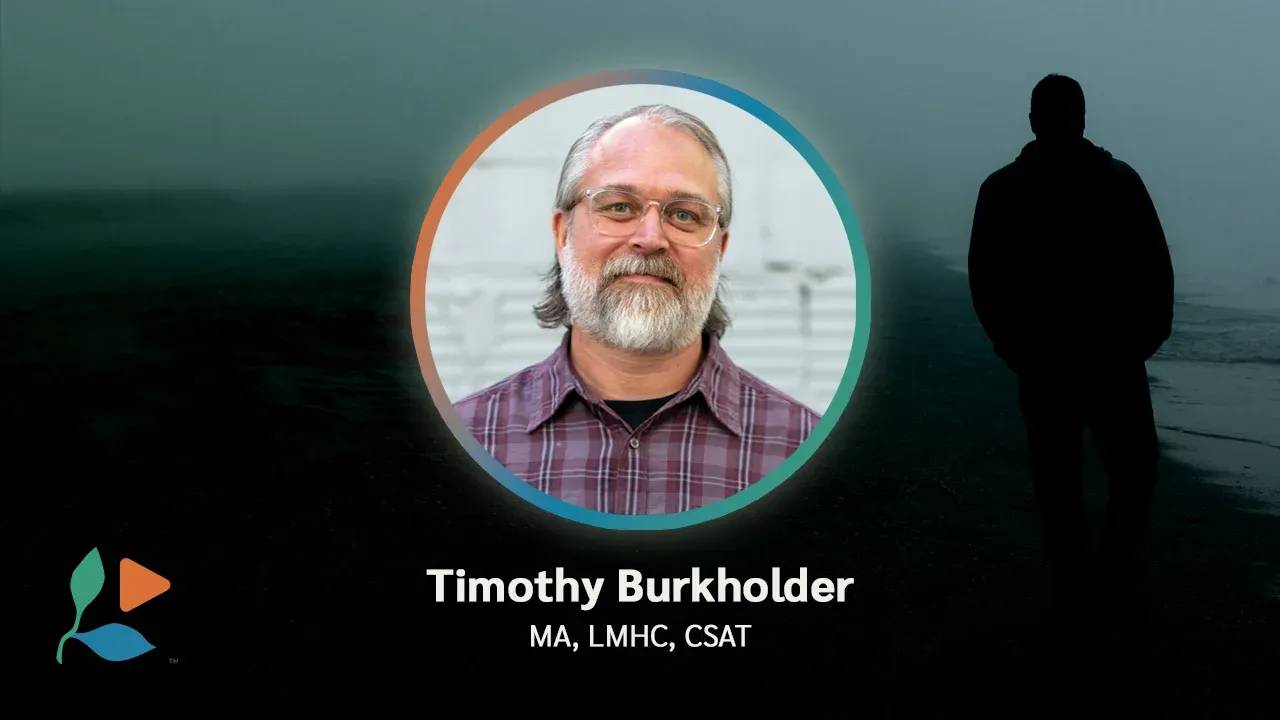
Loneliness is one of those feelings that can show up anywhere. I've had clients describe feeling lonely in a crowded room, in a loving family, even in a stadium full of cheering fans. It's not about the number of people around you. It's about the gap between the connection you have and the connection youneed.
That gap is real, and it's more common than most people realize. The U.S. Surgeon General's 2023 advisory identified loneliness as a public health epidemic, reporting that approximately half of U.S. adults experience measurable loneliness.1 The health consequences aren't insignificant: lacking social connection can increase the risk for premature death to the same degree as smoking up to 15 cigarettes a day, and a 2025 study found that individuals who always felt lonely had a predicted probability of depression over five times higher than those who never did.2
What Loneliness Is Trying to Tell You
In my practice, I treat loneliness the way I treat every emotion: as an indicator light. It's not a character flaw. It's information. Loneliness is telling you that your current level of connection doesn't match your desired level of connection. You were made for interdependence, not isolation and not total self-sufficiency, but the mutual exchange of being known and knowing others.
That's an important distinction. Dependence means relying only on others. Independence means trying to need no one. Codependence means needing others to be okay so you can be okay. But interdependence is the healthy middle ground: recognizing that you need people in your life and they need you, too.
The Invitation to Solitude
Loneliness doesn't only invite you to reach out either. It also invites you to transform your relationship with being alone.
There's a difference between loneliness and solitude. Loneliness is the negative experience of being alone. Solitude is learning to be alone in a way that's actually nourishing. A 2024 review found that voluntary solitude promotes well-being by providing opportunities for relaxation and engagement in personally meaningful activities. The key variable is choice.3 A 2023 study found that on days when people chose to spend time alone, they reported lower stress and greater satisfaction with their sense of autonomy.4
To be clear, this isn't about avoiding people. It's about developing the capacity to sit with yourself without it feeling like a punishment.
From Loneliness to Solitude: How the Shift Happens
It was found that a simple reappraisal exercise, reading a brief passage about the benefits of being alone, was enough to help participants experience less loneliness during time spent in solitude.5 A 2023 study found that curiosity and openness were key traits of people who experience positive solitude as they approached their alone time as moments of exploration rather than deprivation.6
The shift doesn't happen overnight, and it doesn't replace the need for connection. Both are true at the same time. You need people, and you also need the ability to be at peace with yourself.
How to Apply This Today
- Name the gap. When loneliness shows up, get specific. What kind of connection are you missing? Is it emotional intimacy, shared activity, or simply being seen? Naming the gap helps you know what to pursue.
- Make one small move toward connection. Send a text. Accept an invitation you'd normally decline. Ask someone a real question and listen to the answer. Connection doesn't require grand gestures.
- Reframe your alone time. The next time you're alone, try approaching it with curiosity instead of dread. Ask yourself: what could I enjoy about this moment? A walk, a book, a meal you cook just for yourself.
- Practice being present with yourself. Sit in silence for five minutes without a screen. Notice what comes up. This is the beginning of transforming loneliness into solitude.
Loneliness is not a sign that something is wrong with you. It's a sign that you're human. You were designed for connection, and that longing is actually one of your greatest strengths. When you learn to honor it by reaching out and by learning to be at home with yourself, loneliness becomes less of a sentence and more of an invitation.
Loneliness is just one of the eight core emotions I explore in The Logic of Emotions. In the course, I walk you through what each emotion indicates, what it invites, and what happens when you don't pay attention. If this post resonated with you, the full course offers the framework to build lasting emotional awareness. It's available through a Pay What You Can pricing model ($10 minimum). Begin the journey here.
About The Author:
Tim Burkholder, MA, LMHC, is a licensed mental health counselor at Charis Counseling Center in Orlando, Florida, where he helps clients navigate loneliness, relational disconnection, and the emotional patterns that lead to isolation. Tim's clinical experience with individuals and groups has given him a front-row seat to how loneliness operates in people's lives, and his course The Logic of Emotions offers practical tools for building both deeper connections and a healthier relationship with yourself.
Source References
1. "Our Epidemic of Loneliness and Isolation: Surgeon General's Advisory" — U.S. Surgeon General / HHS, HHS.gov. Cited for loneliness prevalence data and health risk comparisons. Accessed March 7, 2026.
https://www.hhs.gov/surgeongeneral/reports-and-publications/connection/index.html
2. "The impact of loneliness on depression, mental health, and physical well-being" — Multiple authors, PLOS ONE. Cited for depression probability data in lonely vs. non-lonely individuals. Accessed March 7, 2026.
https://journals.plos.org/plosone/article?id=10.1371/journal.pone.0319311
3. "Deconstructing solitude and its links to well-being" — Nguyen et al., Social and Personality Psychology Compass (Wiley). Cited to support voluntary solitude promoting well-being. Accessed March 7, 2026.
https://compass.onlinelibrary.wiley.com/doi/10.1111/spc3.70020
4. "Balance between solitude and socializing: everyday solitude time" — Multiple authors, Scientific Reports (Nature). Cited for finding that chosen solitude reduces stress and increases autonomy satisfaction. Accessed March 7, 2026.
https://www.nature.com/articles/s41598-023-44507-7
5. "Solitude reappraisal helps lonely people experience solitude more positively" — Multiple authors, PMC. Cited to show that a simple reappraisal exercise reduces loneliness during solitude. Accessed March 7, 2026.
https://pmc.ncbi.nlm.nih.gov/articles/PMC11705512/
6. "Who feels good in solitude? Personality and mindset factors" — Weinstein et al., European Journal of Social Psychology (Wiley). Cited to show curiosity and openness as key traits for positive solitude.
https://onlinelibrary.wiley.com/doi/10.1002/ejsp.2983
If you enjoyed this content, consider checking out our available courses
Join Our Mailing List
We'll send you updates on new courses. Double opt-in required. No spamzies.
We hate SPAM. We will never sell your information, for any reason.
